
Promotional Items Aren't an Afterthought. Here's Why They Belong in Your Marketing Strategy
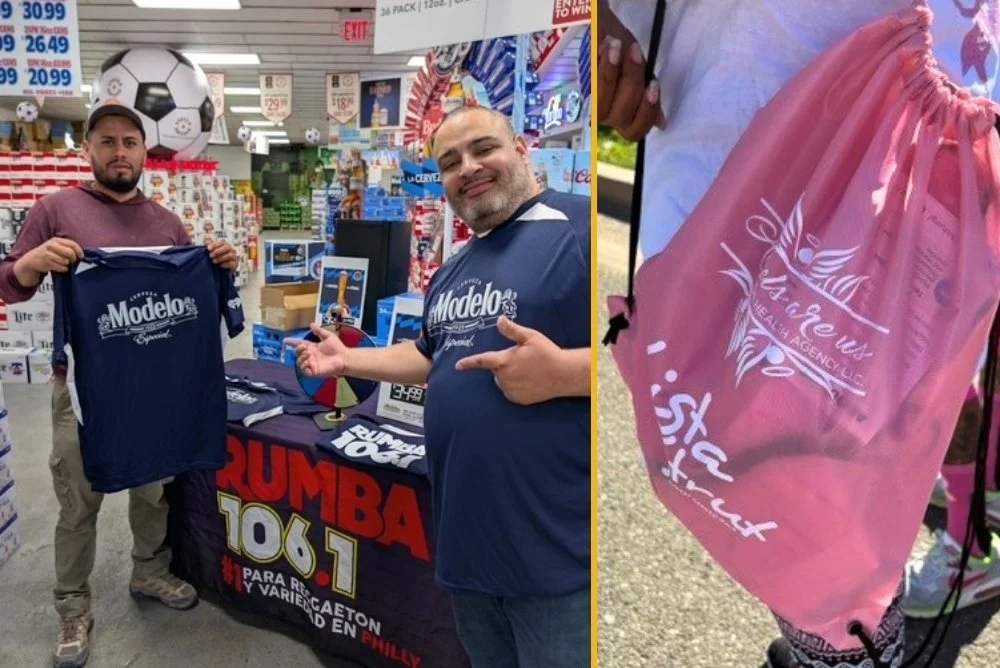
We recently partnered with iHeartMedia to assist with providing promotional items for two sponsored events: World Cup jerseys for Rumba 106.1, and drawstring bags for Sista Strut, a 3k walk in Philadelphia that raises awareness about the issues of breast cancer, specifically in women of color.
Every organization has been there. An event is coming up in three weeks, someone remembers you need "something" to hand out, and a rushed order goes in for whatever's available with the fastest turnaround. The logo gets slapped on a pen or a stress ball, boxes show up a few days before the event (if you're lucky), and the item ends up in a junk drawer within a month.
That's not a marketing strategy. That's a scramble. And it's the exact problem our agency loves to solve.
The product is the message
A branded item isn't just something to fill a conference table or round out a swag bag. It's a physical extension of your brand that someone carries into their home, their office, or their daily routine. A water bottle sitting on a desk, a tote bag used at the grocery store, a hoodie worn on a Saturday morning walk. These are small, repeated impressions that build recognition over time in a way a single social post or email never will.
That only works if the product is chosen with intention. The wrong item, picked because it was cheap or available quickly, sends the opposite message. It tells the recipient the brand behind it didn't think very hard about them either. This is exactly where unique promotional items outperform generic ones. An item that feels thoughtful and specific to the brand gets noticed and kept. An item that feels interchangeable gets tossed.
This is the core difference between a promotional items vendor and a marketing agency that happens to use physical products. A vendor sells you what's in stock. A marketing partner asks what outcome you're trying to create first, then works backward to help you find the exact right product.
Start with the goal, not the catalog
Before choosing a single item, it helps to get specific about what the product needs to accomplish. A state agency handing out materials at a public health fair has a different goal than a corporation building an employee recognition program, and both are different from a nonprofit trying to turn one-time donors into repeat supporters.
A few questions worth asking before ordering anything:
Who is actually receiving this item, and where will they be when they get it?
Is the goal awareness, retention, referral, or appreciation?
Will this item realistically get used, or is it likely to be tossed?
Does the item reflect the quality and tone of the brand behind it?
A municipality building community goodwill might lean toward useful home and auto items like keychains or car accessories that residents keep for years. A corporation recruiting at a career fair might invest in higher quality apparel that candidates actually want to wear. A nonprofit thanking major donors might choose a premium drinkware item that signals appreciation rather than a bulk giveaway that signals an afterthought. The right answer changes with the goal, which is exactly why promotional items for businesses shouldn't be a one-size-fits-all decision.
Quality and categories matter more than people think
Once the goal is clear, the category choice should follow. Apparel and wearables like t-shirts, hoodies, and hats tend to perform well for events and recruitment because people actually wear them in public. Drinkware, from water bottles to tumblers, gets daily use at a desk or in a car, which means repeated visibility.
Bags are useful for conferences and trade shows where attendees are already collecting things and need somewhere to put them. Office and tech items like notebooks, power banks, and USB drives work well for corporate audiences who use them constantly at work. Health and wellness items, including hand sanitizers and stress-relief products, tend to perform well at community and public-facing events. Home and auto items like umbrellas, coasters, and plants create a longer-lasting presence in someone's daily life.
None of these categories is inherently better than another. What matters is matching the category and its quality to the audience and the goal. This is where unique promotional items make the biggest difference. The goal isn't to hand out as many items as possible. It's to hand out the right ones.
Sustainability is now part of the strategy, not a side note
More organizations, especially those serving public and community audiences, are being asked to show they care about sustainability, not just talk about it. Eco-friendly and sustainable product lines have moved from a nice-to-have to an expectation for many corporate, government, and nonprofit buyers. Choosing sustainable options reinforces brand values through the product itself, not just through a mission statement.
Logistics is where good strategy falls apart
Even a perfectly chosen product fails if it shows up late, arrives in the wrong quantity, or gets stuck in a storage problem nobody planned for. This is often the part of the process that gets the least attention until something goes wrong, and it's usually where the real headaches live: chasing multiple vendors, tracking down shipping updates, or scrambling to fix a wrong order days before an event.
Working with a partner who handles sourcing, proofing, storage, and distribution under a single timeline and point of contact removes that risk entirely. It also means the strategic thinking that went into choosing the right product doesn't get undone by a logistics failure at the finish line.
The bottom line
The most effective promotional items for businesses aren't the ones that were fastest to order. They're the ones chosen with a clear purpose, matched to the right audience, backed by real quality, and delivered without the chaos that so often comes with bulk ordering. When promotional items are treated as part of the marketing strategy instead of an afterthought, they do what they're actually supposed to do: create a lasting, positive impression of the brand behind them.
If you're planning an event, a recognition program, or a giveaway and want to make sure your promotional items actually work for you, we'd be glad to talk through what would fit best.
Because when the product is right, it doesn't just get handed out. It gets kept.